Plastic Bottle Printing Methods: Which One Is Best?
Oct 23, 2026
Screen printing is often the best starting point for repeated designs on cylindrical bottles. Pad printing works well for smaller graphics on irregular surfaces, while UV digital printing offers flexibility for detailed, frequently changing artwork. Heat-transfer decoration and labels provide further options when direct printing is not the most practical approach.
For packaging manufacturers, the right choice is the process that produces acceptable bottles consistently at a reasonable total cost. This article explains the main techniques and how to evaluate them before investing in equipment.

Quick Comparison of Plastic Bottle Printing Methods
| Method | Best Suited For | Main Advantage | Key Limitation |
|---|---|---|---|
| Screen printing | Round bottles, repeated logos, decorative bands | Good solid-color coverage and production automation | Screens and accurate registration required |
| Pad printing | Small logos, caps, shoulders, irregular shapes | Flexible contact with complex surfaces | Large graphics can be difficult to transfer evenly |
| UV digital printing | Full-color artwork, prototypes, changing designs | No conventional screens or plates for each design | Specialized bottle handling and suitable curing required |
| Heat-transfer decoration | Complex preprinted graphics | Applies prepared multicolor designs | Requires compatible transfer materials and equipment |
| Labels and shrink sleeves | Extensive graphics or variable product information | Flexible packaging design | Additional materials and application processes |
The first three techniques print directly onto a prepared bottle. Heat-transfer decoration, pressure-sensitive labels, and shrink sleeves are alternative decoration methods. Keeping these categories separate makes equipment comparisons more meaningful.

1. Screen Printing on Plastic Bottles
Screen printing pushes ink through a mesh stencil onto the substrate. For round bottles, a cylindrical printing system rotates the container in synchronization with the screen movement.
This method is especially suitable for repeated logos, bold graphics, and decorative bands on shampoo, cosmetic, and household product bottles.
Industrial screen printing machines can include bottle clamping, servo-controlled movement, multiple color stations, pretreatment, and drying or curing equipment.
Why Production Volume Matters
Every new design may require screen preparation and registration adjustments. When the same design is repeated across many bottles, these setup expenses can be distributed over more finished products.
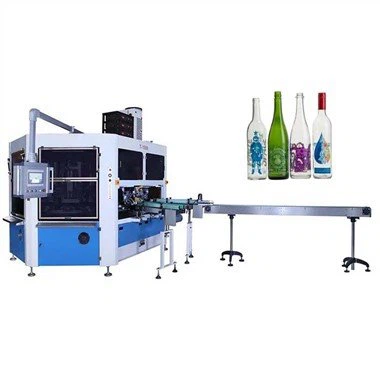
For example, a recurring two-color order for cylindrical HDPE packaging may justify dedicated automation. Topper's automatic plastic and glass bottle screen printing system illustrates a configuration combining printing with bottle handling and flame pretreatment.
But an automatic machine is not necessarily the cheapest option for small, frequently changing orders. Fixture changes, new screens, and trial adjustments consume time.
What About Oval or Tapered Bottles?
A standard cylindrical printer depends on predictable contact between the screen and rotating bottle. Oval, tapered, and sharply contoured containers may need customized fixtures or a different motion system.
The automatic cosmetic bottle screen printer provides an example of equipment using servo movement and registration sensors for packaging decoration.
Before specifying a machine, check the printable area and bottle profile rather than relying only on the container's nominal diameter.

2. Pad Printing on Plastic Bottles
Pad printing transfers ink from an engraved plate to the bottle using a flexible silicone pad. The pad compresses against the product, helping it reach moderately curved or uneven surfaces.
This makes pad printing equipment useful for bottle caps, curved shoulders, molded closures, and small identification marks.
For irregular containers, the main question is whether the pad can reach the intended location without excessive image distortion. Sharp shoulders, deep recesses, and unsupported thin walls can make consistent printing difficult.
When Is a Rotary Pad Printer Useful?
Some products need graphics on multiple faces or at different angles. A rotary fixture repositions the bottle between printing operations, avoiding the need for separate manual handling at every position.
Topper's rotary pad printing equipment for baby bottles demonstrates this approach, with bottle rotation and associated processing functions.
For more demanding surface shapes, a servo-controlled curved-surface pad printer can be evaluated with a customized fixture.
Why Not Use Pad Printing for Every Design?
A broad solid-color graphic requires the pad to collect and release ink uniformly across a large contact area. Compression may stretch the image or produce uneven coverage.
The usable print size also depends on the plate, pad dimensions, machine stroke, and bottle shape. There is no universal maximum applicable to every pad printer.
For a small logo on a molded cap, pad printing may be ideal. For a large wraparound design, cylindrical screen printing is usually a better starting point.

3. UV Digital Printing on Plastic Bottles
UV digital printing deposits ink directly through inkjet printheads and uses ultraviolet light to cure it. Unlike conventional screen printing, the artwork does not require a separate physical stencil.
It is attractive for prototypes, personalized packaging, photographic artwork, and designs that change frequently.
However, a conventional UV flatbed printer cannot automatically print around an entire cylindrical bottle. Round containers require a suitable rotary attachment or dedicated direct-to-object printing system.
Rotation, printhead distance, ink deposition, and curing must work together. Poor synchronization may create image distortion or a visible seam where the artwork joins.
UV curing also does not guarantee strong adhesion. The selected ink must be compatible with the bottle material, and pretreatment may still be necessary.
When evaluating a digital printing line, distinguish its ability to reproduce detailed artwork from its ability to achieve consistent industrial production.
4. Other Plastic Bottle Decoration Methods
Heat-Transfer Decoration
Heat-transfer decoration applies a prepared graphic from a carrier to a bottle using a compatible combination of temperature, pressure, and contact.
This can be useful for complex multicolor designs, but thin-walled bottles must tolerate the process without deformation. Transfer adhesion and dimensional stability should be verified through sample testing.
Hot Foil Stamping
Hot foil stamping is generally used for metallic details rather than complete full-color bottle graphics. It may suit selected caps, lids, and decorative areas.
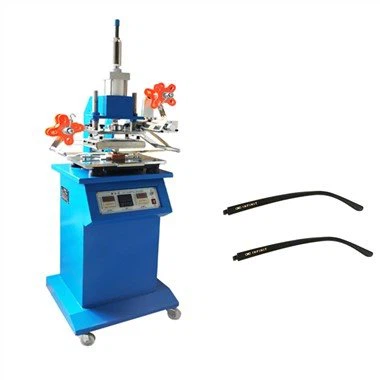
For example, Topper offers hot foil stamping equipment for plastic lids.
Labels and Shrink Sleeves
Pressure-sensitive labels and shrink sleeves are practical when packaging needs extensive artwork, changing information, or wide surface coverage.
They require separate application equipment and consumables. Recycling compatibility should also be checked, particularly for large sleeves that may interfere with material identification during automated sorting.

5. PET vs HDPE vs PP: What Changes When Printing?
Bottle material can influence ink adhesion as much as the printing process itself. The first step is to identify the actual polymer grade and surface condition, not simply assume that all plastic bottles behave alike.
| Material | Main Printing Consideration | Recommended Verification |
|---|---|---|
| PET | Ink compatibility, coatings, transparency, heat sensitivity | Adhesion, opacity, curing, bottle distortion |
| HDPE | Low surface energy may limit wetting and adhesion | Surface preparation and adhesion testing |
| PP | Ink formulation and pretreatment strongly affect bonding | Ink compatibility, treatment conditions, repeatability |
PET Bottles
PET is widely used for beverage and personal care packaging. Transparent bottles may require an opaque white layer beneath colored graphics to achieve the intended appearance.
Ink selection must account for coatings, surface contamination, and the actual PET formulation. Excessive process heat may also deform lightweight containers.
HDPE and PP Bottles
HDPE and PP commonly present adhesion challenges because of their low surface energy. Flame or corona treatment can improve ink wetting, although requirements vary by ink system.
Marabu's technical guidance on screen printing ink auxiliaries explains the role of pretreatment and primers for polyolefin substrates. It also notes that some primer effects are time-sensitive.
Specialized inks can behave differently, so pretreatment must not be prescribed without checking the manufacturer's technical data sheet. Topper's article on selecting pad printing inks provides additional background on ink choice.
Production trials should record treatment settings, elapsed time before printing, curing conditions, and the resulting adhesion performance.
6. Which Printing Method Should You Choose?
Start with the product and artwork, then narrow the equipment options.
- Check the bottle shape. A regular cylindrical body favors rotary screen printing. Localized printing on a complex shoulder may favor pad printing.
- Measure the graphic. Large solid designs generally favor screen printing; small isolated markings may favor pad printing.
- Review the colors. Frequently changing full-color designs may justify evaluating digital printing.
- Confirm the material. PET, HDPE, and PP may require different ink and pretreatment systems.
- Consider order patterns. Repeated designs support tooling amortization; frequent changeovers increase setup costs.
For conventional round containers, compare suitable automatic cylindrical screen printing equipment. For unusual shapes, an oval bottle screen printing configuration may be worth testing before rejecting screen printing entirely.
Practical example: A cylindrical HDPE shampoo bottle with a repeated two-color logo is a strong candidate for screen printing. A small logo near an irregular bottle shoulder may favor pad printing. These are selection examples, not verified customer production cases.
7. Production Speed and Cost per Printed Bottle
Equipment quotations should be compared using accepted production output, not advertised cycle speed alone.
Screen printing requires screens and registration setup. Pad printing uses plates, silicone pads, and fixtures. Digital printing avoids conventional screens but has different ink, maintenance, and equipment costs.
Also consider operator labor, curing, setup time, rejected bottles, and product changes. An automatic bottle screen printing line may reduce manual handling, but the benefit depends on actual production conditions.
Illustrative Cost Calculation
Suppose a hypothetical order involves 10,000 attempted bottles. Option A has $1,000 in allocated setup and fixed costs, plus $0.08 per attempted bottle. With a 96% acceptance rate:
Cost per accepted bottle = ($1,000 + $800) / 9,600 = $0.1875.
Option B has $1,600 in fixed and setup costs, plus $0.05 per attempted bottle. At a 98% acceptance rate:
Cost per accepted bottle = ($1,600 + $500) / 9,800 = approximately $0.2143.
These are hypothetical figures, not Topper pricing or measured results. Neither option represents a specific printing technology. The example shows why lower variable costs do not always produce the lowest finished-part cost.

8. Common Plastic Bottle Printing Problems
| Defect | Likely Causes | First Checks |
|---|---|---|
| Ink peeling | Contamination, incompatible ink, inadequate pretreatment | Material, cleaning, treatment, curing |
| Distorted logo | Incorrect pad contact or unstable bottle movement | Pad geometry, fixture, rotation |
| Uneven coverage | Incorrect ink condition or transfer settings | Viscosity, screen deposit, pressure |
| Color misregistration | Part movement or inconsistent station alignment | Clamping, sensors, synchronization |
| Smearing | Insufficient drying or curing | Ink instructions, curing equipment, exposure |
Change one process variable at a time. If an HDPE bottle repeatedly fails adhesion testing, examine surface preparation before adjusting printing pressure. If a multicolor design shifts progressively around a bottle, check rotation and registration before replacing the ink.
9. Bottle Printing Test and Acceptance Checklist
A production-ready sample must demonstrate more than attractive appearance. Testing should establish whether the selected process remains consistent across representative bottles.
- Substrate: Record polymer type, grade, color, coatings, and surface condition.
- Artwork: Confirm print dimensions, colors, line widths, and registration tolerance.
- Preparation: Record cleaning, flame, corona, or primer treatment where applicable.
- Process: Record the machine, fixtures, ink formulation, and curing conditions.
- Appearance: Inspect coverage, distortion, alignment, and consistency across multiple bottles.
- Durability: Perform agreed adhesion, abrasion, or chemical-resistance tests after the required curing period.
- Output: Record trial duration, acceptable bottles, rejected bottles, and recurring defects.
For appropriate coating systems, ISO 2409:2020 describes a cross-cut test for assessing resistance to coating separation. It is not a direct measurement of adhesion strength and should only be used where its scope and test conditions are suitable.
Acceptance limits must come from the application, ink supplier, and customer requirements rather than an arbitrary universal pass mark.
Frequently Asked Questions
Can plastic bottles be printed directly?
Yes. Screen printing, pad printing, and compatible direct-to-object digital systems can print directly onto suitable plastic bottles. Ink compatibility and pretreatment must be verified.
What is the best method for printing on HDPE bottles?
For repeated graphics on cylindrical HDPE bottles, screen printing is often a practical starting point. The chosen ink and any required surface treatment are critical to reliable adhesion.
Can oval bottles be screen printed?
Some specialized machines can print oval containers, but they may require customized fixtures and motion control. Feasibility depends on the actual bottle profile and artwork.
Is UV printing more durable than screen printing?
Not inherently. Durability depends on substrate preparation, ink formulation, curing, and service conditions. Comparable tests are needed before ranking processes.
Which method is cheapest for large orders?
There is no universal winner. Compare setup, tooling, consumables, labor, utilization, and accepted output using the same production assumptions.
Conclusion: Match the Process to the Bottle
Screen printing is often suitable for repeated designs on cylindrical packaging. Pad printing offers flexibility for small graphics on irregular surfaces, while UV digital printing can support variable, detailed artwork. Other decoration methods remain useful when direct printing does not meet the design or production requirements.
The final decision should follow material evaluation, artwork review, realistic cost comparison, and sample testing.
Request a Plastic Bottle Printing Solution
Topper Printing supplies industrial pad printing, screen printing, and related decoration equipment. Send your bottle material, dimensions, photographs, artwork, number of colors, and required production capacity for an application review.
Contact Topper Printing to Discuss Equipment Selection and Sample Printing