

What is the role of the registration system in a screen press machine?
Nov 05, 2025
Hey there! As a supplier of screen press machines, I've been getting a lot of questions about the role of the registration system in these machines. So, I thought I'd take a moment to break it down for you.
First off, let's talk about what a screen press machine is. In simple terms, it's a device used to transfer ink onto a substrate, like paper, fabric, or plastic, through a mesh screen. These machines are super versatile and are used in a wide range of industries, from printing T - shirts to labeling products.
Now, the registration system in a screen press machine is like the unsung hero. It's responsible for making sure that the different colors or patterns in a print job line up perfectly. You see, when you're printing a multi - color design, each color is applied separately through its own screen. If the registration isn't spot - on, the colors won't align correctly, and you'll end up with a blurry, off - kilter print.
Let's say you're using a Automatic Cylinder Screen Printing Machine to print a complex logo on a cylindrical object. This machine has to precisely position the screen over the substrate for each color pass. The registration system ensures that the screen moves to the exact right place every single time. It takes into account factors like the size of the substrate, the shape, and the alignment of the different design elements.
The registration system works in a few different ways. One common method is through mechanical registration. This involves using pins, guides, and other physical components to hold the substrate and the screen in place. These mechanical parts are adjusted to ensure that the screen and the substrate are in the correct position relative to each other. For example, in a 4 Color Screen Printing Machine For Plastic Bucket, mechanical registration helps to keep the plastic bucket steady and align the screens for each of the four colors.
Another approach is optical registration. This uses sensors and cameras to detect alignment marks on the substrate or the screen. The machine then adjusts the position of the screen based on the data from these sensors. Optical registration is especially useful when dealing with substrates that might shift slightly during the printing process or when high - precision alignment is required. In a Bottle Screen Printing Machine, optical registration can account for any minor variations in the shape or position of the bottles, ensuring a perfect print every time.
The role of the registration system also extends to improving efficiency. When the registration is accurate, there's less waste. You don't have to re - print jobs because of misaligned colors, which saves both time and money. It also allows for faster production speeds. Since the machine can quickly and accurately position the screens, you can print more items in a shorter amount of time.
Moreover, a good registration system enhances the overall quality of the prints. Customers expect sharp, clear, and well - aligned designs. Whether it's a high - end fashion brand printing on their clothing or a consumer goods company labeling their products, the quality of the print reflects on the brand. A reliable registration system in the screen press machine helps to meet these high - quality standards.
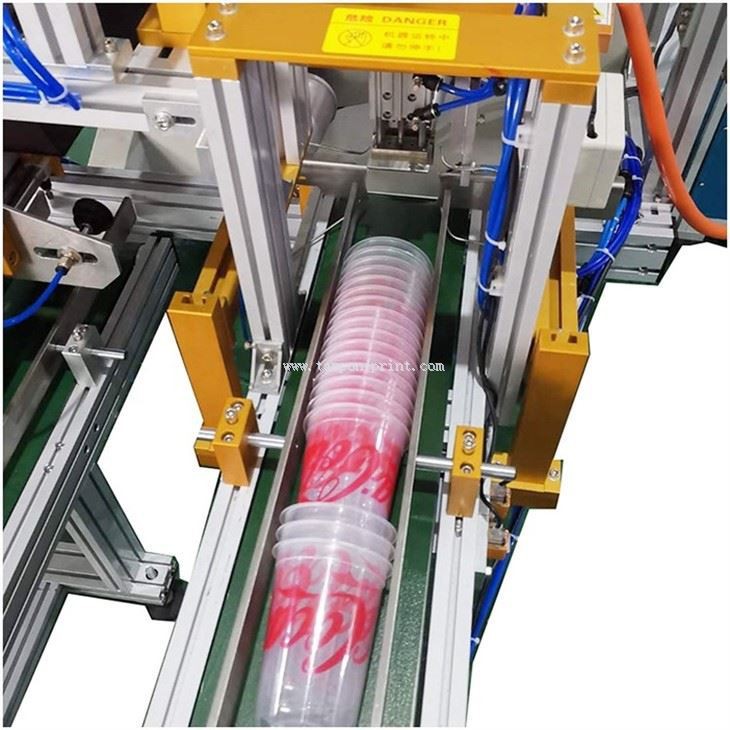

Now, let's talk about some of the challenges that the registration system might face. One issue is substrate variability. Different substrates have different properties, like thickness, flexibility, and surface texture. These differences can affect how the substrate sits on the machine and how the screen aligns with it. For example, a thin, flexible fabric might stretch slightly during the printing process, which can throw off the registration. The registration system has to be able to adapt to these variations to maintain accurate alignment.
Another challenge is wear and tear. Over time, the mechanical components of the registration system can wear out. The pins might become loose, or the sensors might start to malfunction. Regular maintenance is crucial to keep the registration system in top - notch condition. This includes cleaning, lubricating, and replacing any worn - out parts.
In addition, as technology advances, the demands on the registration system are also increasing. Customers are asking for more complex designs, higher resolution prints, and faster production speeds. This means that the registration system has to be more precise and more adaptable than ever before.
So, if you're in the market for a screen press machine, the registration system should be one of your top considerations. A high - quality registration system can make a huge difference in the quality, efficiency, and overall success of your printing operations.
Whether you're a small - scale printer looking to expand your capabilities or a large - scale manufacturer aiming to improve your production processes, we've got the right screen press machine for you. Our machines are equipped with state - of - the - art registration systems that are designed to meet the toughest printing challenges.
If you're interested in learning more about our screen press machines or have any questions about the registration system, don't hesitate to get in touch. We're here to help you find the perfect solution for your printing needs. Let's start a conversation and see how we can take your printing business to the next level.
References
- Screen Printing Technology Handbook
- Industrial Printing Equipment Manuals