

Can an Automatic Pad Printer print on glass?
Nov 13, 2025
Hey there! As a supplier of Automatic Pad Printers, I often get asked a bunch of questions about what these machines can and can't do. One of the most common queries I hear is, "Can an Automatic Pad Printer print on glass?" Well, let's dive right into this topic and find out.
First off, let's understand what an Automatic Pad Printer is. It's a super - handy machine that uses a silicone pad to pick up ink from a printing plate and then transfer it onto the surface of an object. These printers are great because they can print on all sorts of shapes and sizes, and they're pretty fast at getting the job done. We've got some cool models in our range, like the Automatic 1 Color Metal Caps Pad Printer, which is awesome for printing on metal caps, and the Tampo Pad Printing Machine, a classic in the pad - printing world.
Now, back to the question: printing on glass. Glass is a bit of a unique material. It's smooth, non - porous, and can be a bit tricky to print on compared to other surfaces like plastic or metal. But the good news is, yes, an Automatic Pad Printer can print on glass! However, there are a few things you need to keep in mind.
Surface Preparation
The first step in getting a good print on glass is to make sure the surface is clean. Glass can easily pick up fingerprints, dust, and other contaminants. Even the tiniest bit of dirt can mess up the print quality. You should clean the glass with a suitable glass cleaner and a lint - free cloth. After cleaning, it's a good idea to let the glass dry completely. Some people also use a process called plasma treatment. This helps to make the glass surface more receptive to the ink, improving the adhesion of the print.
Ink Selection
Not all inks are created equal, especially when it comes to printing on glass. You need to use inks that are specifically formulated for glass printing. These inks are designed to adhere well to the smooth glass surface and provide long - lasting prints. They also need to be resistant to things like water, abrasion, and chemicals. UV - curable inks are a popular choice for glass printing with Automatic Pad Printers. They dry very quickly when exposed to UV light, which means you can get a high - quality print in no time.
Pad Selection
The silicone pad used in the Automatic Pad Printer also plays a crucial role in printing on glass. You need to choose a pad with the right hardness and shape. A softer pad is usually better for glass because it can conform to the surface more easily and pick up and transfer the ink more effectively. The shape of the pad should also match the area you want to print on. For example, if you're printing on a small, circular area of the glass, a round pad would be the best choice.
Printing Process
Once you've got your glass cleaned, the right ink, and the appropriate pad, it's time to start printing. The Automatic Pad Printer will first pick up the ink from the printing plate using the silicone pad. Then, it will press the pad onto the glass surface to transfer the ink. The pressure applied during this process is important. Too much pressure can cause the ink to spread or the pad to deform, while too little pressure may result in an incomplete or faint print. You may need to do a few test prints to get the pressure just right.
After the ink is transferred, if you're using UV - curable inks, you'll need to expose the printed glass to UV light to cure the ink. This step is essential for making the print durable and long - lasting.
Applications of Glass Printing with Automatic Pad Printers
There are tons of applications for printing on glass using Automatic Pad Printers. In the beverage industry, you can print logos, labels, or decorative designs on glass bottles. This can make the products stand out on the shelves and give them a more professional look. In the home decor market, glassware like vases, bowls, and mirrors can be printed with beautiful patterns or personalized messages. And in the electronics industry, glass screens can be printed with icons, text, or other markings.
Challenges and Solutions
Of course, there are some challenges you might face when printing on glass with an Automatic Pad Printer. One common issue is ink cracking or peeling over time. This can be caused by poor adhesion, which may be due to improper surface preparation or using the wrong ink. To solve this, make sure you follow the surface - preparation steps carefully and use the right ink for glass.
Another challenge is getting consistent print quality across multiple pieces of glass. Variations in the glass surface, such as slight differences in smoothness or curvature, can affect the print. You may need to adjust the printer settings, like the pressure and speed, for each batch of glass to ensure consistent results.
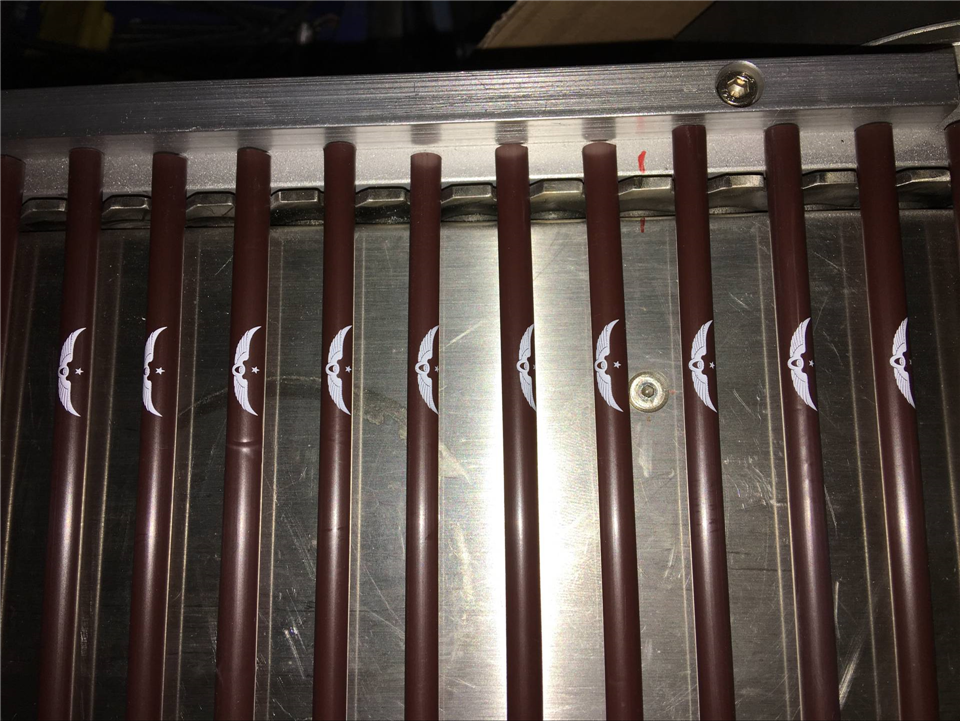

Our Automatic Plastic PLA Straw Pad Printing Machine and Glass Printing
While our Automatic Plastic PLA Straw Pad Printing Machine is mainly designed for plastic straws, the technology behind it can also offer some insights for glass printing. The precision and control features of our machines can be adjusted to meet the requirements of glass printing. For example, the adjustable pressure and speed settings can be fine - tuned to ensure a perfect print on glass, just like on plastic straws.
In conclusion, an Automatic Pad Printer can definitely print on glass, but it requires careful attention to surface preparation, ink selection, pad selection, and the printing process. With the right approach, you can achieve high - quality, long - lasting prints on glass.
If you're interested in using an Automatic Pad Printer for glass printing or any other applications, don't hesitate to get in touch. We're here to help you choose the right machine, provide all the necessary advice, and support you throughout the printing process. Whether you're a small business looking to add some branding to your glass products or a large - scale manufacturer in need of high - volume printing, we've got the solutions for you. Reach out to us for a chat about your printing needs, and let's work together to bring your ideas to life!
References
- "Pad Printing Technology Handbook"
- Industry reports on glass printing and pad - printing techniques