

What is the difference between a manual and an automatic rotary screen machine?
Jan 20, 2026
In the world of screen printing, rotary screen machines are a powerful and efficient tool, widely used in various industries for their capabilities to produce high - quality prints on a variety of substrates. As a rotary screen machine supplier, I often encounter customers who are confused about the differences between manual and automatic rotary screen machines. In this blog, I will delve into the characteristics, advantages, and disadvantages of both types to help you make an informed decision when choosing the most suitable machine for your business.
Operational Mechanism
The most fundamental difference between manual and automatic rotary screen machines lies in their operational mechanisms.
A manual rotary screen machine requires significant human intervention throughout the printing process. The operator is responsible for tasks such as loading the substrate onto the printing table, positioning the screen, adjusting the printing parameters like pressure and ink flow, and starting and stopping the machine at appropriate times. For example, when printing on irregular - shaped objects, the operator has to manually align the object with the screen to ensure an accurate print. This hands - on approach gives the operator a high degree of control but also requires a certain level of skill and experience.

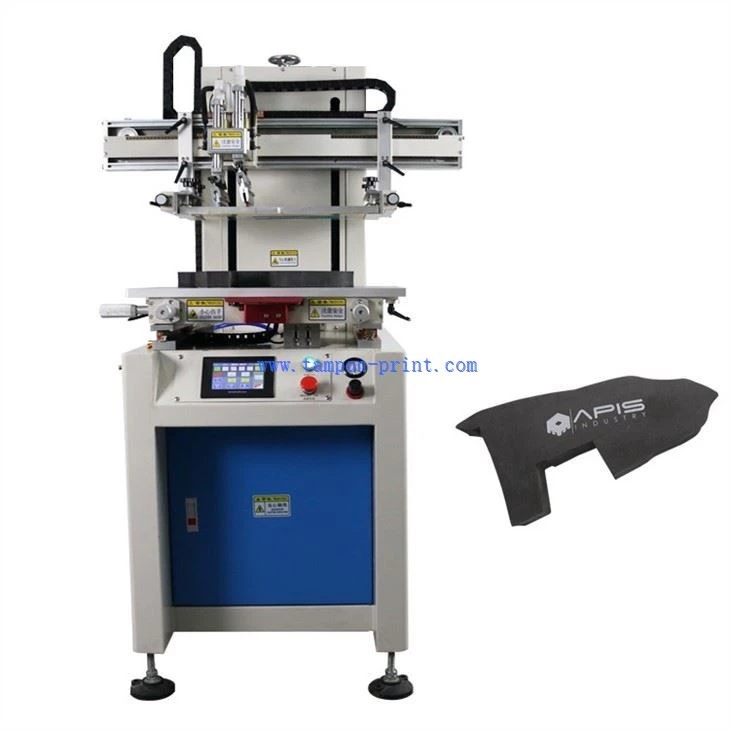
On the other hand, an automatic rotary screen machine is designed to automate many of these tasks. It uses sensors, motors, and programmed algorithms to perform functions such as substrate feeding, screen positioning, and ink distribution. Once the machine is programmed with the required settings, it can run continuously with minimal human supervision. For instance, in a large - scale production environment, an automatic machine can feed multiple substrates one after another, print the design accurately, and eject the printed products without constant operator input.
Speed and Efficiency
Speed and efficiency are crucial factors in any production environment, and there is a significant gap between manual and automatic rotary screen machines in this regard.
Manual machines are generally slower compared to their automatic counterparts. The time taken for each printing cycle is longer because the operator has to perform each step manually. This can be a significant drawback when large - volume production is required. However, for small - scale or custom - made projects where precision and attention to detail are more important than speed, manual machines can be a viable option. They allow the operator to take their time and ensure that each print meets the exact specifications.
Automatic rotary screen machines, on the other hand, are built for high - volume production. Their automated processes eliminate the time - consuming manual steps, enabling faster printing cycles. They can operate at a consistent speed, which translates into higher productivity over a given period. For example, in a commercial printing business that needs to produce thousands of printed items per day, an automatic machine can significantly reduce production time and increase output.
Precision and Consistency
Precision and consistency are vital for the quality of the printed products.
Manual machines can achieve high precision, especially when operated by skilled technicians. However, the quality and consistency of the prints can vary depending on the operator's skill level and fatigue. Minor variations in pressure, ink application, or screen positioning can lead to differences in the final prints. This is acceptable for some projects where a certain degree of uniqueness is desired, but in industries where identical prints are required, it can be a problem.
Automatic machines offer a higher level of precision and consistency. The computer - controlled systems ensure that each printing cycle follows the same parameters, resulting in uniform prints. This is particularly important in industries such as packaging and textiles, where brand consistency is crucial. For example, if a company is printing labels for its products, an automatic machine can ensure that all labels have the same color, design, and print quality.
Cost
Cost is always an important consideration when purchasing a rotary screen machine.
Manual machines are generally more affordable in terms of upfront costs. They have a simpler design and require less sophisticated technology, which makes them a cost - effective option for small businesses or startups with limited budgets. Additionally, the maintenance costs of manual machines are usually lower because they have fewer complex components.
Automatic machines, on the other hand, come with a higher price tag. Their advanced technology, including sensors, motors, and control systems, adds to the manufacturing cost. Moreover, the software and programming required for their operation also contribute to the overall expense. However, in the long run, the increased productivity and efficiency of automatic machines can offset the initial investment, especially for large - scale production facilities.
Flexibility
Flexibility in terms of printing different substrates and designs is another aspect to consider.
Manual rotary screen machines are highly flexible. They can easily adapt to different types of substrates, including irregular - shaped objects, and can handle a wide range of print designs. The operator can make on - the - spot adjustments to accommodate changes in the substrate or design requirements. This makes them ideal for small - batch, custom - printing jobs where versatility is key.
Automatic machines are also flexible, but to a certain extent. While they can be programmed to print different designs on standard - sized substrates, they may require more time and effort to reconfigure for non - standard substrates or complex designs. However, for mass - producing standard designs on common substrates, automatic machines are a reliable choice.
Applications
The choice between a manual and an automatic rotary screen machine also depends on the specific applications.
Manual machines are often used in industries where customization is the norm. For example, in the art and craft sector, manual machines allow artists to create unique prints on various materials such as handmade paper, fabric, or wood. In the promotional products industry, they are used to print small batches of custom - designed items like keychains and phone cases.
Automatic machines are more commonly found in large - scale manufacturing industries. In the packaging industry, they are used to print high - volume labels, cartons, and packaging materials. The textile industry also relies heavily on automatic rotary screen machines to print patterns on fabrics for clothing, home decor, and other applications.
Choosing the Right Machine for Your Business
Now that we have explored the differences between manual and automatic rotary screen machines, how do you choose the right one for your business?
If you are a small business or startup with a limited budget, and your printing needs involve small - batch, custom - made products, a manual rotary screen machine may be the best choice. It offers flexibility, a relatively low initial investment, and the opportunity for hands - on control. You can start with a Rotary Small Screen Printing Machine 2 Color, which is suitable for small - scale operations and can provide you with the experience and skills needed to grow your business.
On the other hand, if you are operating a large - scale production facility and need to produce high - volume, consistent prints, an automatic rotary screen machine is the way to go. It may require a larger upfront investment, but the increased productivity and efficiency will pay off in the long run. For businesses in the packaging industry, a Screen Printing Machine For Paper Bags can be a great addition to your production line. And if you are looking for a machine for single - head vacuum printing, the Single Head Vacuum Screen Printing Machine is worth considering.
In conclusion, understanding the differences between manual and automatic rotary screen machines is essential for making an informed decision. Whether you choose a manual or an automatic machine, it should align with your business goals, production requirements, and budget. If you have any questions or need further advice on choosing the right rotary screen machine for your business, feel free to contact me for a detailed discussion and procurement negotiation.
References
- "Screen Printing Technology Handbook"
- Industry reports on rotary screen printing machines
- Technical specifications from leading rotary screen machine manufacturers